


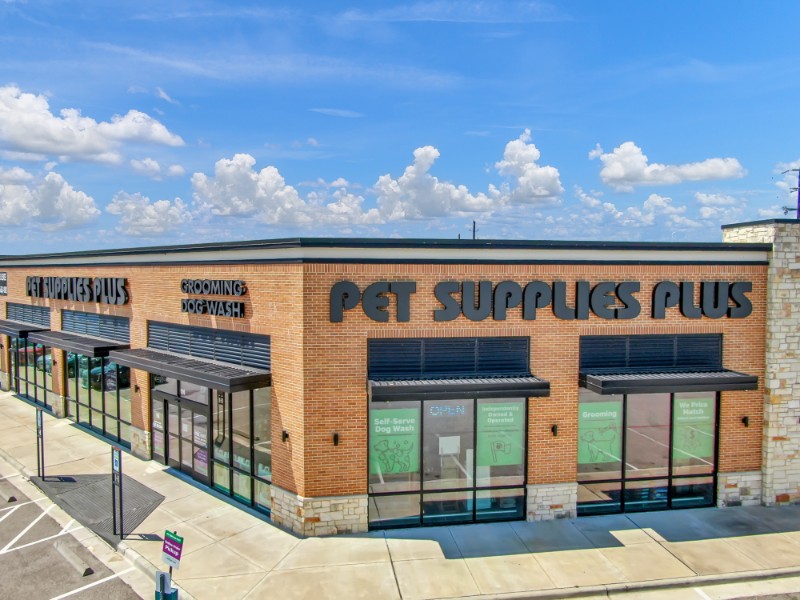
In retail redevelopment, there is often a noticeable difference between what is designed and what is ultimately built. It is within that difference—sometimes subtle, sometimes more apparent—that many of the qualities that define a project begin to shift.
Closing that gap is not simply a matter of refining design. It requires a process capable of carrying intent forward, from early concept through construction, with enough continuity to preserve what the project set out to achieve.
There is a particular kind of disappointment that can emerge near the end of a retail redevelopment project.
The renderings were compelling. The design logic was sound. The client understood what the project was trying to achieve. And yet the finished environment the one people will actually walk through and spend time in feels like a version of the idea rather than the idea itself.
The courtyard meant to anchor the center becomes narrower through value engineering. The ceiling height that would have given a corridor its sense of generosity is reduced to simplify coordination. The entry sequence designed to signal arrival becomes a standard threshold once structural constraints are resolved.
No single decision is catastrophic.
Together, they begin to change the experience.
This is not a story about bad design.
It is a story about a process that was not structured to support it.
Often, retail redevelopment does not fall short because the ideas were wrong. It begins to lose clarity when the architect who conceived those ideas is no longer present when the decisions that matter most are made.
In conventional project delivery, design and construction are treated as separate phases, led by different parties. The architect develops the concept, produces the documents, and hands the project across a contractual boundary to a contractor who bids and builds.
This separation is intended to create clarity and accountability. In practice, it can also introduce distance.
Design intent exists in drawings, specifications, and in the thinking behind them. A contractor engaging with those documents for the first time under pricing pressure, working against a schedule, and encountering conditions the drawings could not fully anticipate must make hundreds of decisions about how the design is executed.
Some preserve intent. Others quietly shift it.
And because the architect is no longer embedded in the process, the threshold for revisiting those decisions becomes higher. Many are simply carried forward.
In retail redevelopment where existing conditions reveal themselves gradually, and where construction must often occur alongside active operations—the number of these decisions increases. The gap between intent and outcome is not a failure of design or construction on its own.
It is a consequence of how the process is structured.
What Changes When the Architect Leads
Architect-Led Design Build offers a different way of organizing that process.
It is not a new idea the role of the master builder has long unified design and construction—but its application to complex commercial redevelopment introduces a level of continuity that conventional delivery often lacks.
When the architect leads from concept through construction, the conditions that create the handoff problem begin to shift.
Trade partners are engaged early, contributing insight into constructability, cost, and sequencing while ideas are still being shaped—not after they have been fixed. Constraints that would otherwise surface mid-construction are understood early enough to be designed around.
The architect does not hand off intent. They carry it forward.
This continuity changes how decisions are made under pressure.
When value engineering occurs, the question is no longer only what can be removed. It becomes what must be preserved. That distinction requires someone who understands the design deeply enough to recognize which elements are flexible—and which are fundamental.
Why This Matters in Retail
The relevance of Architect-Led Design Build becomes particularly clear in retail redevelopment.
Aging retail environments carry conditions that cannot be fully documented in advance—structural inconsistencies, layered infrastructure, and tenant operations that constrain phasing and access. The project that is designed is rarely identical to the one that is ultimately built.
The difference lies in how those conditions are navigated. Retail itself has also changed.
Centers that perform well today tend to offer something beyond convenience. They function as places people choose—environments shaped by clarity of movement, visibility, proportion, light, and the relationship between interior and exterior space.
These qualities are not decorative. They are architectural. And they are either carried through construction—or gradually diminished within it.
A retail environment whose identity is embedded in its architecture—its structure, its spatial logic has the capacity to adapt. It can accommodate new tenants, evolving uses, and changing patterns of movement without needing to be reimagined each time.
That resilience is not only a result of design. It is also a result of how that design is delivered.
The Process Is the Product
There is a tendency to think of process as a means and the built outcome as the end.
Retail redevelopment suggests something different.
The process does not simply deliver the outcome it shapes it. A design developed with construction knowledge embedded within it is inherently stronger. A construction process guided by the architect who conceived the design produces a more coherent result.
The gap between what is imagined and what is built is not inevitable. It reflects how the work is organized.
Retail redevelopment has always been about recognizing value that already exists and shaping its next chapter with care.
That work requires a process capable of carrying intent forward one where design and delivery are not separated, but aligned.