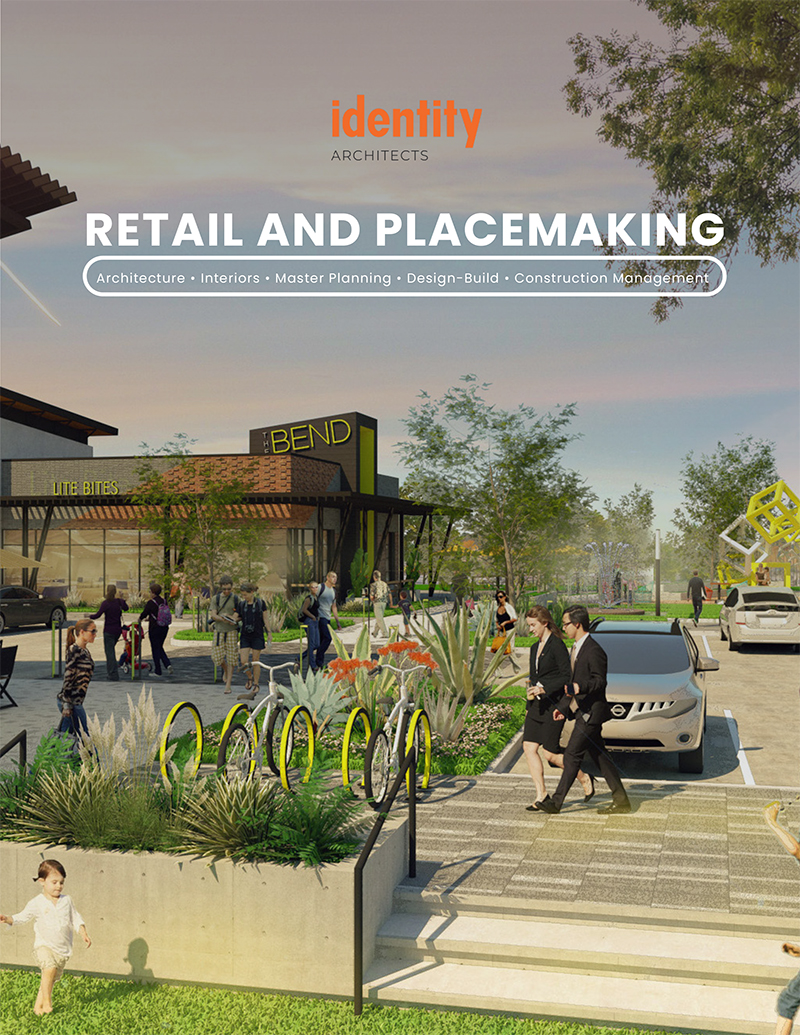


Placemaking
In a way, placemaking is about nothing – the void. The Space between crafted architectural and environmental elements like intricate building facades, mature trees, landscaping and shade canopies is a resulting open space, meant for us to occupy, or experience in a way that’s engaging, comfortable and worthwhile.
Rooted in origins of the traditional courtyard, forum or piazza – these places are what brings us all together, sharing a space with others in our community. Essentially, placemaking taps into what makes us human. Whether enjoying a meal at a sidewalk cafe, reading a book on a park bench, window-shopping, or bringing the family to a central lawn to run around and play games – the place to do all these things must be carefully designed in such a way that invites us in, encouraging us to stay and hang out for a while.
Particularly critical in the car-centric and digital era we live in, it is important to recognize the urgency of providing such spaces within our communities – and fast! The economics of the commercial real estate environment (particularly retail/restaurants) – often leads to over-parked concrete havens where buildings are sparsely spaced, the human factor quickly missed. Add to this the continuously evolving digital frontier where the internet promotes virtual interactions and exchanges over anything in-person.
It’s therefore the responsibility of developers, master planners, and architects to strive for something more – something as simple as bringing us back to the roots of human interaction – with a contemporary angle. A place that’s not your home, or where you work; rather, a third place – made specifically to drawn you in – perhaps to conduct business, go shopping, grab a bite, or simply meet up with a friend.
Placemaking, in short, prioritizes the human factor within our built environment.
guiding principles of placemaking
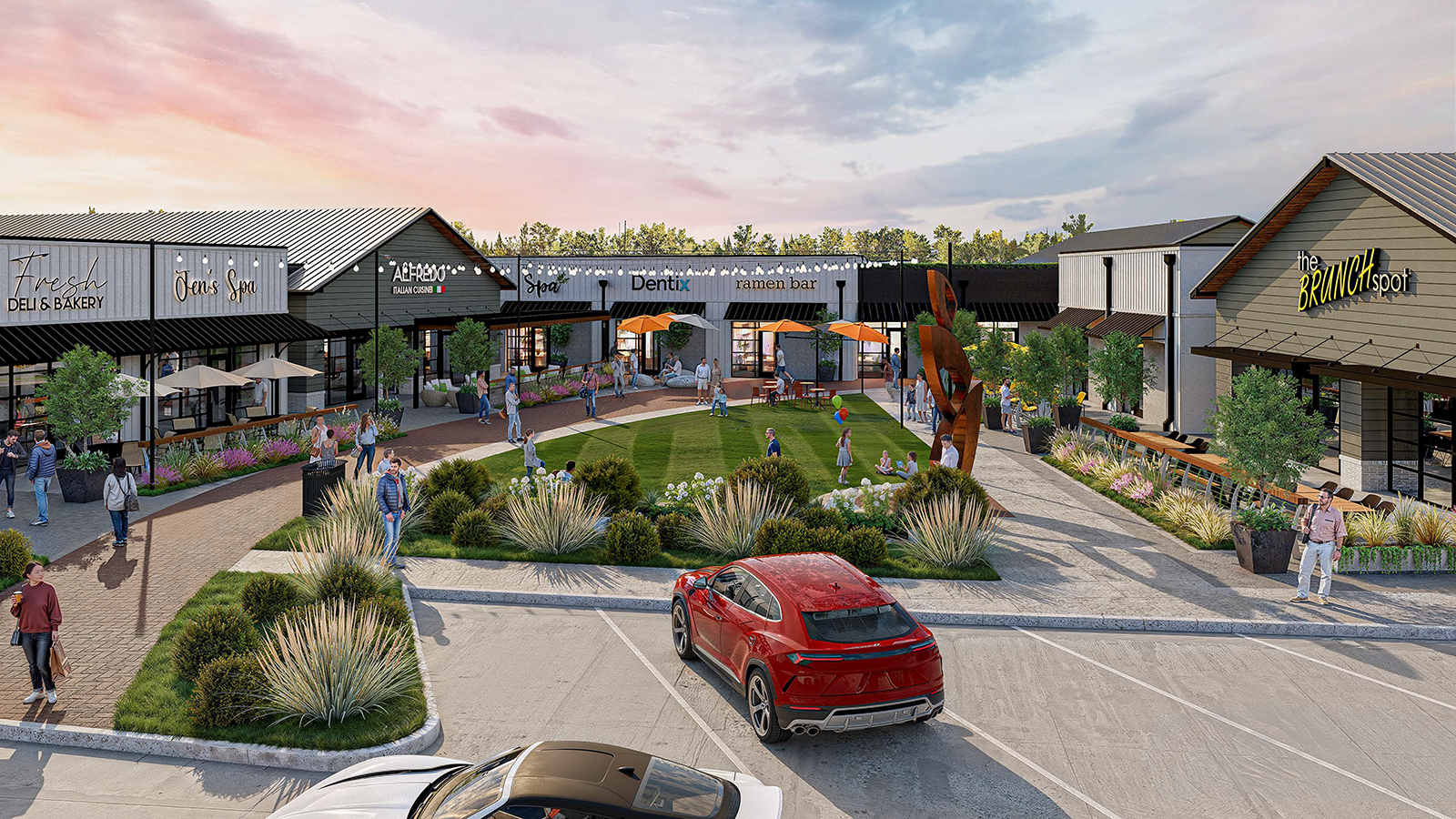
movement creates opportunity
People don’t experience a project all at once, they move through it:
- We design clear paths, visual connections, and points of curiosity that guide movement naturally through a site.
- Anchors are positioned to pull people across the development.
- Sightlines are opened to reveal activity and invite exploration.
- Circulation is intuitive, not forced.
- When movement is intentional, every storefront has a better chance to succeed.
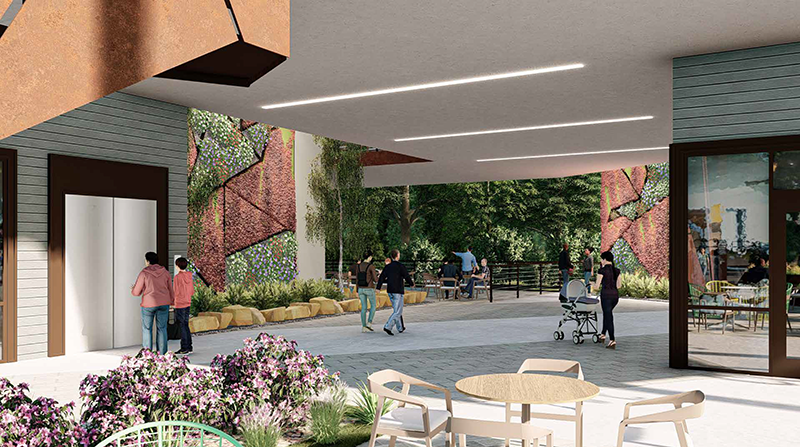
activation of space
A valuable space in any retail environment is where buildings meet people:
- We design with every detail in mind, storefronts, patios, entries, and transitions to feel open, active, and connected.
- Transparency increases visibility into tenant spaces.
- Patio zones extend activity beyond the interior.
- Entries are designed as moments.
- Circulation patterns turn moments into an experience.
- Experience creates return visits.
- Activation of details creates energy. Energy creates dwell time. Dwell time increases foot traffic.
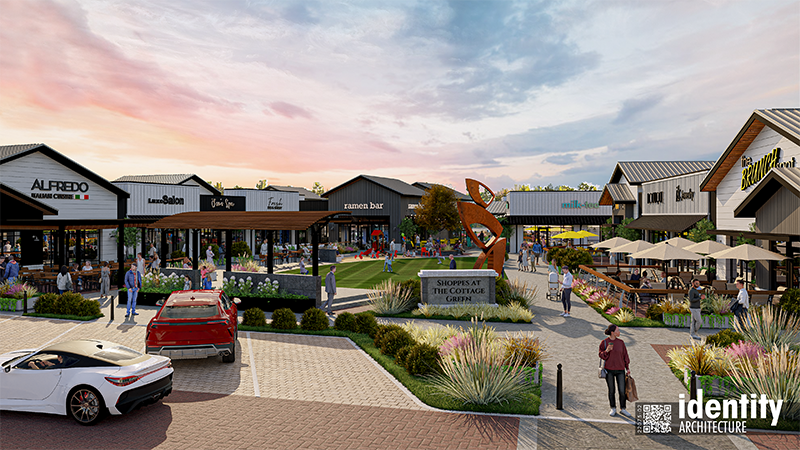
form and function
The development’s architectural language – establishing identity.
- The consistent use of form, materials, scale, and proportion creates a cohesive identity across a project.
- Materials, proportions, and rhythm establish continuity.
- Tenant spaces are adaptable without becoming fragmented.
- The environment feels curated instead of assembled.
- Allows for evolution while protecting long term value.
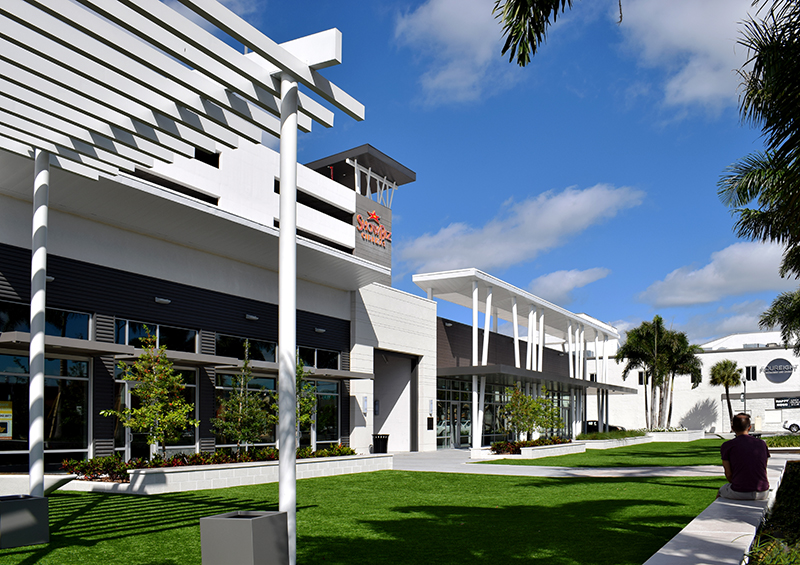
performance
Performance is not simply a result or an afterthought at the end of a project. It is shaped by the decisions made early and carried through with discipline.
- Strategic collaboration is a value creation strategy.
- Coordination is thorough – working with public private interests, municipal fluency is key.
- Strong outcomes are shaped by alignment of design and services.
- Design must perform financially as well as aesthetically.
what are the business differentiators
We understand what placemaking is and what makes it successful. Differentiators that factor into underwriting a successful placemaking project:
Placemaking isn’t aesthetic enhancement.
It’s a value creation strategy.
At Identity Architects, we partner with developers and municipalities to transform land into destinations — environments that attract tenants, drive foot traffic, increase lease velocity, and strengthen long-term asset value.
We understand what matters to you:
- Predictable timelines
- Entitlement clarity
- Construction feasibility
- Market differentiation
- Tenant adaptability
- Return on investment
We approach placemaking as an asset strategy.
They design environments that:
- Increase perceived value within the submarket
- Strengthen tenant positioning
- Support absorption velocity
- Enhance long-term rent durability
Our work reflects an understanding that design must perform financially.
Our structured process — from Information Transfer through permit-ready documentation — creates clarity before capital is heavily deployed.
We value:
- Two-week conceptual turnarounds that allow early underwriting refinement
- Clear decision gates
- Transparent scope
- Early engineering coordination
- Municipal fluency
This reduces redesign cycles and entitlement uncertainty.
Our architect-led design build perspective gives us practical insight into:
- Constructability
- Phasing strategy
- Infrastructure coordination
- Service access
- Parking logic
- Future tenant adaptability
We understand that flexibility protects long-term asset performance.
In master planned environments, public trust matters.
Identity communicates clearly with planning departments, review boards, and city leadership.
Documentation is thorough. Coordination is proactive.
That alignment protects schedule and strengthens public-private partnerships.
We expect creativity — but not chaos.
Identity delivers:
- Cohesive district identity
- Activated public realms
- Walkable, experience-driven environments
- Architectural consistency with flexibility for tenant evolution
All within a defined process that keeps timelines moving.
Great developments must endure beyond the initial lease-up.
Identity designs:
- Buildings that age well
- Spaces that adapt
- Districts that encourage repeat visitation
- Environments that strengthen community identity
We are strategic collaborators in value creation.
Placemaking, when done strategically, delivers all of it.