

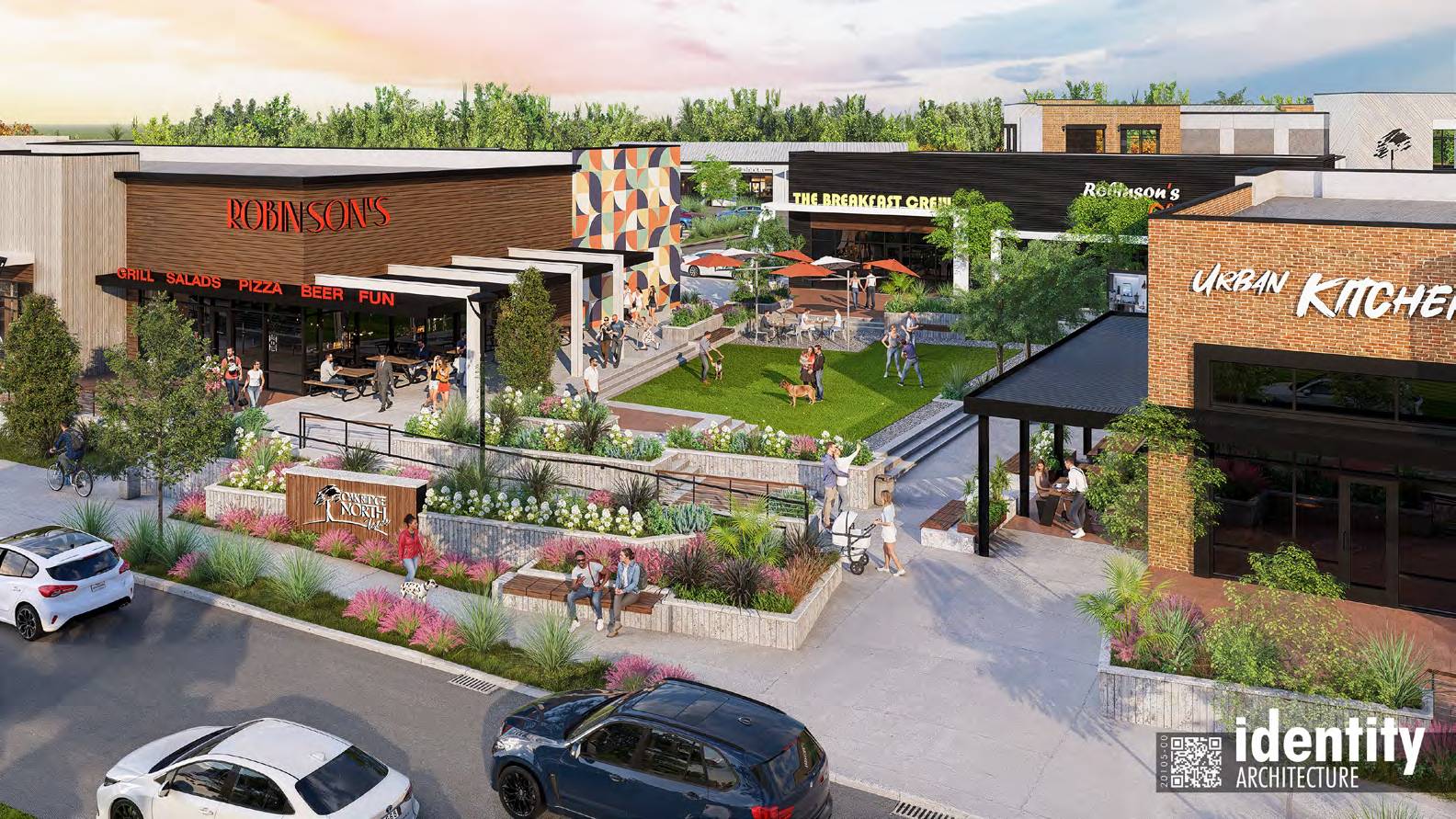
Retail architecture has always been closely tied to how people live their everyday lives. Unlike other building types, retail spaces are experienced casually and repeatedly during errands, meals, and moments in between. They shape routines, influence movement, and quietly influence how communities interact with their surroundings.
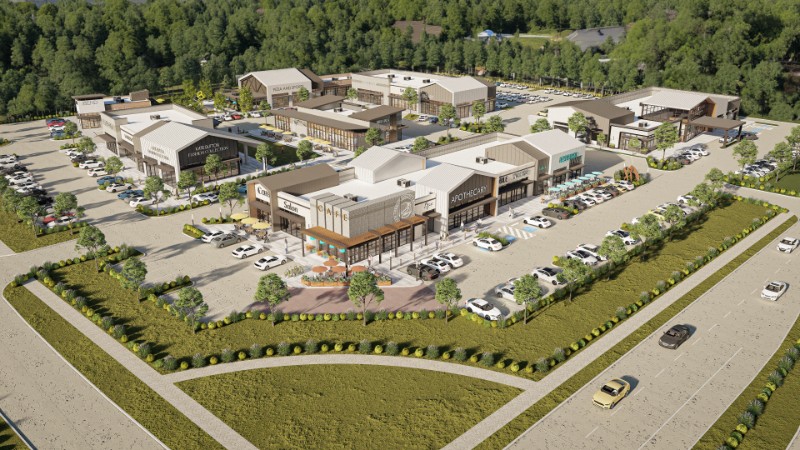
At their best, these environments become more than places to buy things. They are places people return to—not out of necessity, but because something about them feels worth returning to.
Because of this, retail architecture carries a responsibility that extends beyond commerce. It must respond not only to market needs, but to patterns of use, change, and longevity.
For many years, retail environments were designed around efficiency and access. Their success was measured by volume, visibility, and convenience. While this model served its purpose, it was built on assumptions that no longer fully apply. As consumer behavior has evolved and as online retail has removed the necessity of shopping in person many physical retail environments have struggled to remain relevant.
What once worked no longer performs in the same way.
Retail redevelopment emerges from this shift.
It reflects a growing recognition that existing retail properties must be reconsidered rather than simply refreshed. Redevelopment is not about erasing the past, but about working with existing structures, sites, and systems and rethinking how they can support new forms of activity.
Many of these buildings were never intended to change. Their layouts are fixed, their infrastructure dated, and their capacity shaped by earlier expectations.
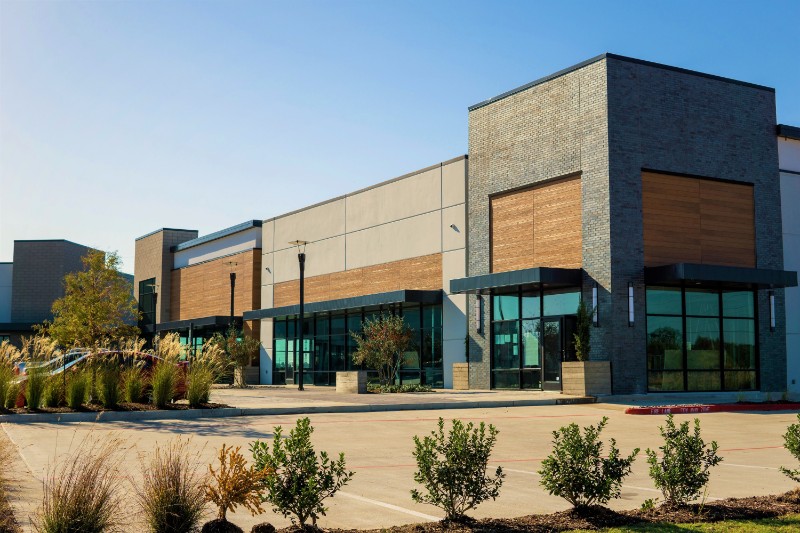
Yet within those constraints lies opportunity.
As retail redevelopment has become more prevalent, expectations for these environments have also changed. Today, physical retail is no longer defined solely by what it sells, but by the experience it offers. With convenience readily available elsewhere, people choose where to go based on whether a place feels engaging, comfortable, and worth spending time in.
Retail environments are no longer destinations by default. They must become places people choose.
This shift has brought placemaking into sharper focus.
In retail redevelopment, placemaking is not about adding amenities or programming for its own sake. It is not a landscaped edge applied to a building that was never designed to face its surroundings.
It is spatial.
It is shaped through scale, movement, light, and the relationship between indoor and outdoor space. Decisions about circulation, materiality, and proportion influence how people experience a place whether it feels intentional or incidental.
It is the difference between an environment that processes visitors and one that holds them one that encourages people to stay, to return, and to build familiarity over time.
Achieving this is where intent most often begins to break down.
Retail redevelopment involves multiple stakeholders—each with valid but competing priorities. Flexibility, efficiency, cost, and schedule all place pressure on design decisions.
When placemaking is not embedded early, it is often the first to be compromised. Courtyards narrow. Setbacks disappear. Ceiling heights are reduced. Each decision is reasonable on its own.
Collectively, they erode the qualities that make a place feel considered.
This is where the method of delivery becomes important.
Architect-Led Design Build offers a framework in which design intent and execution are aligned from the outset. Rather than treating design and construction as separate phases, they are developed in parallel allowing placemaking goals, feasibility, and constructability to be evaluated together.
Contractors are engaged early, not as downstream participants, but as collaborators. Constraints are understood sooner. Opportunities are identified earlier. Decisions are made with greater clarity.
In this model, the architect remains responsible from concept through completion carrying the spatial intent forward, responding to evolving conditions, and maintaining continuity as the project moves from idea to built form.
This continuity becomes especially important in retail redevelopment, where foresight is essential.
These environments must accommodate change new tenants, shifting uses, evolving patterns of movement. The decisions made early in planning quietly determine whether a place can adapt over time or becomes obsolete once again.
When placemaking is integrated into the architecture itself rather than applied through signage, programming, or temporary activation it becomes more resilient. The identity of the place is not tied to a single tenant or moment, but held within the spatial framework.
Ultimately, retail redevelopment is about extending the life of places that already exist.
It is not about replacing what is outdated, but about recognizing the value embedded within the built environment its structure, its location, and its relationship to the community around it and shaping its next chapter with intention.
In a landscape where convenience is no longer a differentiator, long-term value is no longer defined by access or efficiency alone.
It is defined by whether a place continues to be used, returned to, and remembered over time.
That value is not incidental. It is shaped through decisions architectural and operational that allow placemaking to endure beyond initial delivery.
Not just access. Not just efficiency. But a reason to be there and to come back.