


Abraham Watkins Law Firm: Designing Through Complexity in Downtown Houston
When Abraham Watkins approached Identity Architects about expanding their century-old Commerce Street headquarters, the project came pre-loaded with constraints: a designated floodplain, a historic district overlay, a connected existing structure, and the logistical reality of a phased construction process in one of downtown Houston’s most visible corridors.
What followed was a three-phase project — garage remodel, four-story vertical addition, and full interior build-out — that required nearly every person in Identity’s office to touch it at some point.
“That is a project, in my opinion, that took almost every person here in this office to make come to fruition,” said David Kastendieck, Identity’s healthcare and technical specialist. “What we bring to the table is a collective that helps the entire project.”
The Challenge: Every Problem Created the Next One
The site at 800 Commerce Street presented compounding constraints from the start. Flooding wasn’t hypothetical — the original building and adjacent structures had flooded multiple times in the past decade. The floodplain elevation in that area reached over 14 feet, nearly the ceiling height of the ground floor.
That single fact cascaded into a series of architectural decisions.
“It’s gonna flood. There’s no stopping it. It’s gonna happen,” said project architect Bryan Cater. “So how do you account for that? Do you flood proof a level or do you raise it?”
Raising the floor plate to meet floodplain requirements meant reconciling the new addition’s levels with a 125-year-old existing structure — while simultaneously satisfying Houston’s historic district requirements about scale, proportion, and material context. Each solution introduced new parameters. The garage remodel that had already been established in Phase 1 became the foundation for flood resilience strategy. Infrastructure didn’t sit beneath the project — it shaped it.
“Every step of the way there was a new problem to solve,” Cater noted. “Every challenge kind of created its next challenge.”
Working With the Historic District, Not Against It

The site sits within the Main Street Market Square Historic District, which meant the Certificate of Appropriateness process was a central part of design development — not a downstream approval to manage.
Identity’s approach was to treat the historic guidelines as a design input rather than a compliance checklist. On Commerce Street, the design maintains contextual alignment with the original contributing structures. On Milam Street, where the new addition faces a wider civic context, Identity had more latitude for contemporary expression.
“The historic commission cares a lot about contributing context,” said Thomas De Froy, Identity’s design lead. “Despite being a brand new contemporary office, [the addition] acts, looks, feels — in scale and material — like those contributing buildings.”
The firm across Milam Street became an unlikely reference point. Similar in scale, four stories, even with a penthouse pop-up — it informed how Identity calibrated the new addition’s presence on the skyline.
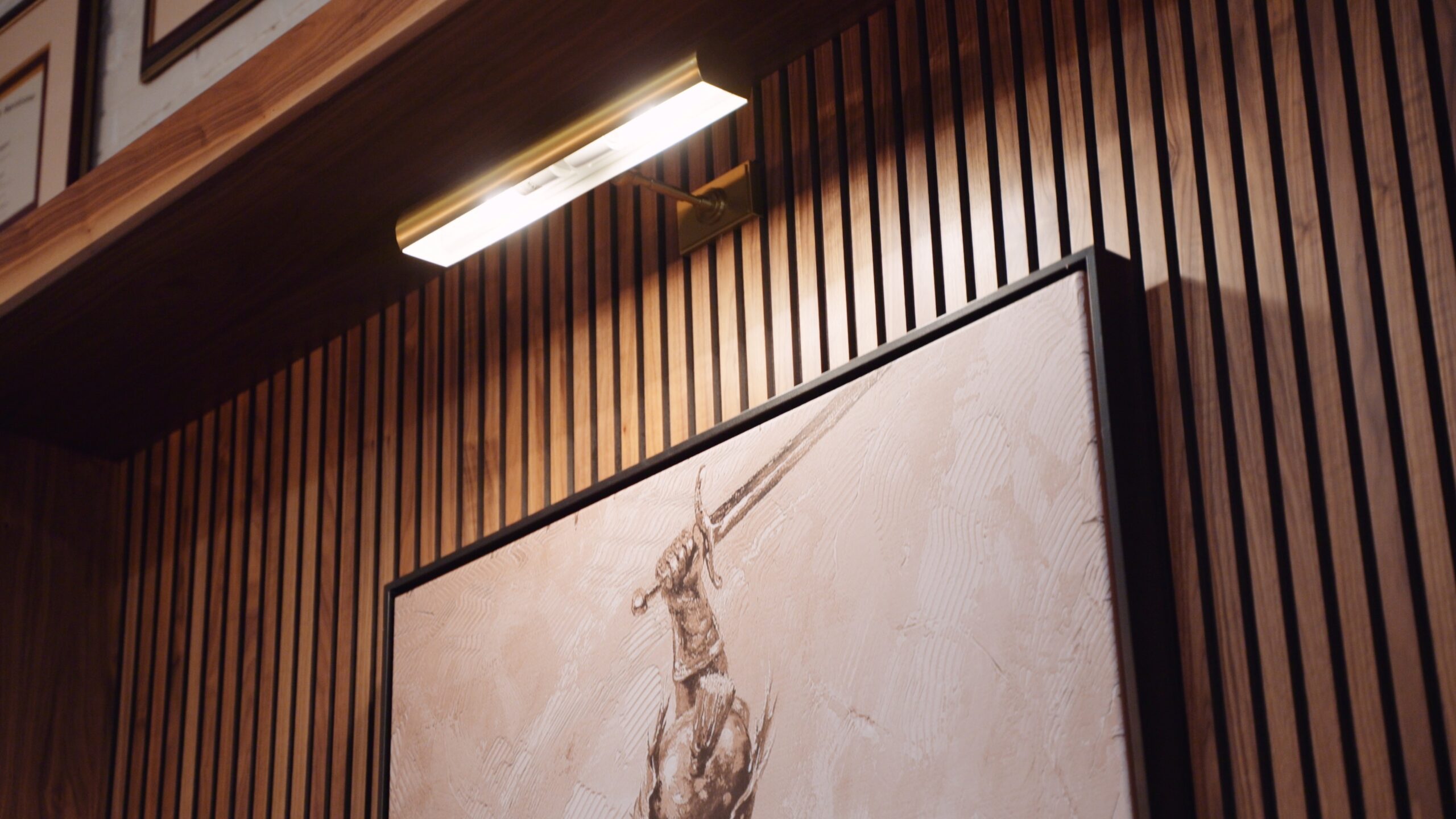
Inside, original mahogany doors and exposed historic materials were preserved and layered with new clean-lined paneling. The height of the original door openings — taller than anything you’d see in a contemporary office — became a design feature rather than an anomaly.
Continuity as a Risk Management Strategy
One of the less-visible aspects of this project is how Identity’s integrated delivery model held it together through significant mid-course adjustments. Cost constraints required redesign of the fourth level and a reduction in structural steel prior to construction — the kind of change that can fracture a project’s coherence when design and construction are handled by separate teams.
Because Identity’s architects remained engaged through construction administration — and because their construction management arm, identityBUILT, was active on site — adjustments could be absorbed without losing the original design intent.
“Identity Built construction management is working over there and trying to solve the problems as they go,” said Keenon Rayner, Managing Principal. “It’s been great that we’ve been able to collaborate on this. It just seems like a much smoother process.”
That continuity — schematic strategy, construction documents, interiors, and construction administration operating together rather than sequentially — is what allowed a project this complex to stay coherent across multiple phases and years.
The View From the Fourth Floor
There’s a moment in the walkthrough where Bryan Cater pauses on the upper floor and describes what surrounds the site: I-45 bringing traffic in from North Houston, Buffalo Bayou curving nearby, the University of Houston Downtown campus, the entrance corridor to the city. Abraham Watkins occupies a highly visible position in that picture.
“A lot of responsibility to make sure all this comes together,” Cater said. “You’ve got a lot of people you have to make happy.”
For Identity, that responsibility — to the client, to the historic district, to the city — is exactly what makes a project like this worth doing.
“We can actually see it from our office,” Rayner said. “That’s how close they are as neighbors. To sit there and say we did that, and we did it from start to finish — that’s pretty neat.”
Identity Architects is a Houston-based architecture firm specializing in commercial and medical projects. Our Architect-Led Design Build approach integrates design, construction documentation, and construction management under a single leadership team — from early visioning through project completion.